Every year, I read more books than I care to admit in public. Leadership, strategy, biographies, the occasional bestseller that promises transformation in twelve steps and mostly delivers vocabulary.
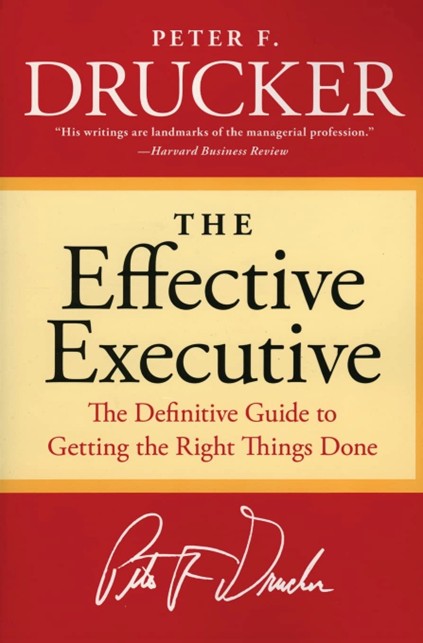
And yet, year after year, I keep returning to the same book, for the same reason. It’s The Effective Executive, by Peter Drucker. Not because it is new. Quite the opposite. It has the irritating quality of staying relevant long after trends have moved on. And buried in its very restrained prose is one idea I find myself reusing, consciously or not, every single year.
Drucker’s argument is simple and unforgiving: leadership is about making a small number of decisions that actually matter, and then having the discipline to make them stick. In CIO work, this sounds obvious until you try to apply it. The environment is designed to pull you in the opposite direction. New technologies appear. Risks multiply. Urgencies stack up. The temptation is always to add. Add initiatives. Add priorities. Add governance. Add meetings to keep track of what was added last quarter.
When I take Drucker seriously, the exercise usually starts with subtraction. Fewer strategic themes. Clearer ownership. Explicit trade-offs. Decisions that are not exciting when they are made, but powerful precisely because they remain stable long enough to change behavior.
The second half of the idea is where it becomes uncomfortable. Making decisions is rarely the hard part. Making them stick is. In practice, this means resisting the urge to reopen settled questions every time pressure increases. It means accepting short-term friction in order to preserve long-term coherence. It means repeating the same rationale more often than feels elegant, until it stops sounding like an opinion and starts sounding like shared reality.
I come back to this idea every year because it scales. It works when the organization is calm and when it is under stress. It works during transformation phases and during periods of consolidation. And it applies just as much to my own agenda as it does to the teams I work with. When everything feels urgent, I return to it. When priorities start multiplying, I return to it. When I catch myself adding complexity instead of clarity, I return to it.
One book. One idea. Used carefully, year after year.
Leadership rarely comes from having more answers. More often, it comes from choosing a few decisions that truly matter, and having the patience to stand by them long enough for reality to catch up.